
Sizing
What Size Dumpster Do I Need in Sarasota? A Straight Answer
A Sarasota operator's sizing guide to 10, 15, 20, 30 and 40 yard roll-offs — real dimensions, honest pickup equivalents, and why weight, not volume, decides most jobs on the Suncoast.
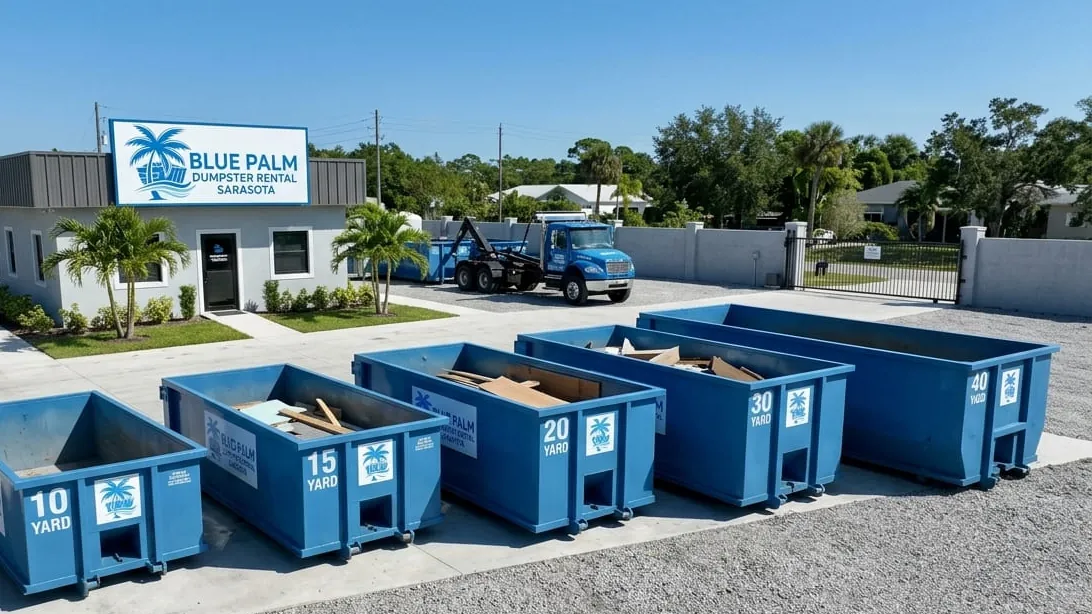
The first question on nearly every call is some version of “what size do I need?” It is fair, and it is almost always the wrong first question — because on a lot of Sarasota jobs the container is not sized by how much room the debris takes up. It is sized by what the debris weighs. A 20 yard box loaded with terrazzo and broken block hits the scale limit while you can still see the floor of it. A 40 yard box of pool cage screen rides out so light the driver barely feels it. Same truck, completely different math.
Here is how we actually size roll-offs on the Suncoast: real dimensions, honest pickup-load equivalents, and the local traps that make a northern sizing guide useless here.
The five sizes, straight up
We run 10, 15, 20, 30 and 40 yard roll-offs. The pickup equivalents below assume a full-size 8 foot bed heaped to about two and a half cubic yards — more than most people actually load.
| Size | Dimensions (L × W × H) | Typical weight allowance | Pickup loads | What it is actually for in Sarasota |
|---|---|---|---|---|
| 10 yard | 12 ft × 8 ft × 3.5 ft | 1–2 tons | 4–5 | Dense material only: a lanai slab, small pool deck, driveway section, tile tear-out, one bathroom gut. Also right for a condo or villa clear-out. |
| 15 yard | 16 ft × 8 ft × 4 ft | 2–3 tons | 6–7 | The in-between box people forget exists. A single-room remodel, a packed two-car garage and attic, a small re-roof, a downsizing move. |
| 20 yard | 22 ft × 8 ft × 4.5 ft | 2–4 tons | 8–10 | Our most-ordered size. Kitchen and bath remodel, average shingle re-roof, garage-attic-shed cleanout, most impact window jobs, surge gut-out of a small home. |
| 30 yard | 22 ft × 8 ft × 6 ft | 3–5 tons | 12–14 | Whole-home cleanouts, larger remodels, full interior gut after water intrusion, builder punch-outs and first-refresh work in Lakewood Ranch. |
| 40 yard | 22 ft × 8 ft × 8 ft | 4–6 tons | 16–18 | Bulk with little weight: pool cage screening and aluminium, lanai furniture, commercial cleanouts, light demolition, large estate clears. |
Weight allowances move with material and facility, and the two counties do not run the same solid waste system, so treat those tonnages as the shape of the thing and confirm yours when you book. Full specs sit on our dumpster sizes page.
Weight beats volume on dense material
This is the one thing that separates a good order from an overweight one. Concrete, block, stucco, terrazzo, ceramic and porcelain tile, mortar, sand and fill dirt all run roughly 2,400 to 2,800 pounds per cubic yard. Do that arithmetic once and it changes how you think. Three cubic yards of broken slab is close to four tons — a full load in a container that still looks two-thirds empty. That is why clean concrete goes in a 10 yard dumpster and nothing bigger.
Sarasota generates a lot of this material. Homes here are slab-on-grade concrete block and stucco, so almost any structural change produces dense debris. A lanai slab, a pool deck, a driveway apron, a screen-cage footer, a knocked-out block wall — all of it is tons before it is volume. Mid-century houses add terrazzo under the carpet, and it weighs like the concrete it is. On a Sarasota School of Architecture house, get a salvage opinion before you break it; there are buyers.
Keep dense material clean and by itself. A load of nothing but concrete and block can go to a different facility than mixed debris, and one couch tossed in costs you that option — which is why we run them as concrete and heavy debris loads.
Roofing is sized by squares and layers
Roofing is the other job where weight rules. You size it by roof squares (one square is 100 square feet) and by how many layers are coming off, not by how big the house looks.
Architectural shingle runs roughly 250 to 400 pounds per square depending on weight and age, so a 25 square single-layer tear-off is a 20 yard dumpster job. Two layers doubles it. Then the part people here get wrong constantly: concrete and clay tile run roughly three to four times a shingle square. That is not a rounding error, it is the difference between one container and three. A tile roof on an older Mediterranean Revival place, or a higher-end job on Longboat, can throw ten tons, and no single box takes ten tons. That work gets staged with swap-outs.
Count your squares, count your layers, and say the word “tile” out loud on the phone if it applies; the roofing tear-off size guide goes deeper. Wind-uplift and secondary water barrier rules sit under all of it and do get amended — confirm what applies to your permit with the Florida Building Commission.
Wet storm debris is the other trap
After a surge event, everything you carry out is heavier than it was dry. Saturated drywall, soaked carpet and pad, wet insulation, swollen cabinet boxes and waterlogged furniture can run two to three times their dry weight. A 30 yard dumpster can go overweight while it looks half full, and anyone who gutted a house in 2024 remembers that surprise.
Helene pushed salt water through ground floors on Siesta, Lido, Longboat and Casey in late September 2024 without ever making landfall in the county, and Milton came ashore at Siesta Key two weeks later with the wind. Two debris streams, one season. Surge means saturated interiors out fast, and fast matters — in this humidity the mould window is roughly 24 to 48 hours. Wind means roof, soffit, fascia, cage and trees. The storm surge cleanup guide walks the sequence.
One rule that does not bend: vegetative debris rides separately. Florida separates yard trash from solid waste, so palm fronds, live oak limbs and Australian pine go as a clean load to a yard-waste facility. Mix them into a construction load and it gets reclassified at the scale.
The opposite problem: screen, cage and aluminium
Now flip it. Pool cage and lanai screening, aluminium framing, soffit, gutter, vinyl fencing and patio furniture are bulky and close to weightless. A cage that came down in the wind fills a container with air. This is the job that genuinely wants a 40 yard dumpster, and one of the few times we talk someone up a size instead of down. Cutting frame into short sections and laying it flat roughly doubles what fits.
Slab-on-grade changes the cleanout math
This is why sizing guides written for Ohio overshoot here. Sarasota homes are slab-on-grade, so there is no below-grade level holding thirty years of accumulation. The volume on a cleanout lives in the garage, the attic, the lanai and the backyard shed, plus whatever sits in a rented unit across town.
In practice a three-bedroom cleanout that a northern guide would put in a 30 or 40 fits a 20 here, or a 30 if the garage is genuinely packed and the shed is coming out too. This is one of the oldest median-age markets in the country, so we load a lot of these — our estate cleanout crews walk the garage and pull the attic hatch before naming a size, because those two spaces decide it.
Condo and villa work: placement, not volume
For a condo or villa unit clear-out, a 15 yard dumpster is usually plenty and a 10 often does it. The constraint is almost never capacity — it is where the box goes: parking areas, guest spaces, narrow drive aisles, association rules, sometimes a fixed window of hours.
Association repair work is a different animal. Milestone inspections and structural integrity reserve studies have pushed a sustained wave of balcony, railing, walkway, spalling concrete, waterproofing and re-roof work across Sarasota, Longboat and downtown, and that debris is dense: small boxes, staged swaps, tight placement. Those requirements have been amended more than once, so an association should confirm current obligations with its own attorney and engineer, not with a dumpster company. See our condo milestone repair debris guide.
Impact windows: heavy, awkward, specific
Impact window replacement is a big local market with a debris stream all its own. Old aluminium frames, slider tracks, single glazing and jalousie louvres are heavy for their bulk, sharp and awkward to stack. Twenty openings on a typical block home is comfortably a 15; a whole-house job with sliders is a 20. Glass compacts poorly and cannot be tossed loose over the rail safely, so plan on someone standing in the box.
Fitting it on the property
Size is only half the order. The other half is whether the truck can put the box where you want it.
- About 60 feet of straight approach in line with the drop point — the truck backs in and rolls the container off, it does not set it sideways.
- Around 10.5 feet of width, clear of mailboxes, irrigation heads and parked cars.
- Twenty-plus feet of overhead clearance for the hoist arm. This is the one that catches people. Low live oak limbs over a driveway in Southgate or along Bahia Vista will stop a delivery cold, and so will power drops, carport overhangs and cage roofs. Trim before we come, not while we are sitting there.
- Surface. Driveways on Siesta Key, Lido Key, Longboat Key and Casey Key are short and often shell or paver. Shell ruts under a loaded truck and pavers crack in the wheel path. Sandy soil over a high water table softens fast, and grass placement after a wet week buries a truck.
Protection boards go down as standard under the rails on every drop — plywood spreads the point load on pavers, brick and finished concrete, and there is more in our notes on driveway protection at delivery. On a short key driveway the honest answer is sometimes a smaller box, or a street placement, which brings permit questions of its own. Check Sarasota County or Manatee County for right-of-way rules, and remember municipalities set and revise their own — verify before delivery day.
Season matters more than you think
Snowbird season runs roughly November through April, and the shoulder weeks either side are the busiest we get — seasonal residents open up, clear out and close down inside the same few weeks, and everyone wants the same Tuesday. Book early. The other predictable crunch is the fortnight after any named storm, when every container on the Suncoast is spoken for inside 48 hours. Get on the schedule before the cone shows up on the news.
How to describe your job on the phone
Give us five things and we will size it in about ninety seconds:
- What the material is — household goods, mixed construction, clean concrete, roofing, yard debris, screen and aluminium. Say if any of it is wet.
- How much — square footage, squares and layers on a roof, number of window openings, or just “a packed two-car garage and a shed.”
- The address, so we know the county, the driveway and whether we cross a bridge to a key.
- Where you want it and what is overhead.
- When, and whether you will need a swap-out.
One caveat at every size: we cannot take asbestos-containing material in any container. Pre-1980 stock routinely carries it in floor tile and mastic, pipe wrap, popcorn ceilings and roofing felt, and demolition generally triggers inspection and notification. That is Florida DEP and Department of Health territory, the rules get updated, and a licensed abatement contractor handles it before we deliver. Leftover paint, solvents and pool chemicals go to a county household hazardous waste drop-off, never in the box.
Still not sure? That is what we are here for. Call Blue Palm Dumpster Rental Sarasota at (941) 413-2932, tell us what you are tearing out and where it sits, and we will put the right box on the right spot — flat rate, protection boards down, same-day or next-day across both counties.
Questions this guide did not answer? Call (941) 413-2932. We would rather spend two minutes on the phone than have you order the wrong container.