Storm Cleanup
Hurricane and Storm Surge Cleanup in Sarasota: What to Do With the Debris
Helene brought the surge and Milton brought the wind, two weeks apart. Here is how a Sarasota homeowner handles the debris from each — gut-out order, container sizing, curb piles and what cannot go in.
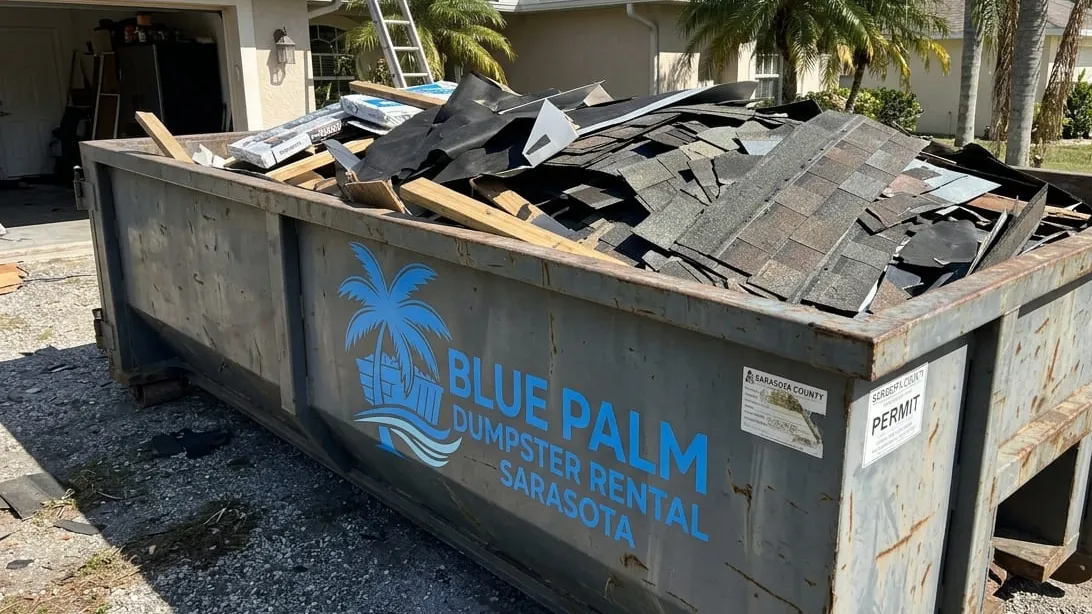
There is a specific kind of quiet on a Sarasota street three days after a hurricane. Generators running, driveways stacked, every homeowner on the block standing in a garage staring at a pile of their own belongings. I have hauled through Ian, Helene and Milton, and the question I get that week is always the same: what do I do with all of this, and in what order.
Most guides treat a hurricane as one event. Sarasota learned in 2024 that it is two, and the two make completely different messes.
The 2024 sequence, and why it matters to your cleanup
In late September 2024, Hurricane Helene tracked north offshore and never made landfall in Sarasota County. It did not have to. The surge it pushed ahead of it ran across Siesta Key, Lido Key, Longboat Key and Casey Key and the low-lying bayfront, putting salt water through ground-floor living space in houses that had never taken water before. Two weeks later, Hurricane Milton came ashore at Siesta Key with the wind — roofs, lanai cages, fences, trees. Hurricane Ian in September 2022 is the other reference point people here still measure against.
Surge first, wind second, fourteen days apart. Plenty of properties got both, and the crews on those lots were doing two unrelated jobs at once. Season runs June 1 to November 30, and the lesson from 2024 is to plan for both, separately.
Document everything before you demolish
Before a single sheet of drywall comes off, photograph and video the whole house room by room — the water line on the wall, the exterior, the yard, the contents still in place. Get serial numbers off the appliances and air handler. Bag samples of flooring, cabinetry and trim; they establish grade later when nobody can remember whether the cabinets were plywood or particleboard.
Open the claim before demolition starts, then get moving. Florida insurance rules, notice requirements and claim deadlines have been rewritten repeatedly, and what applied after Ian is not necessarily what applies now. Do not take a blog's word for it, this one included — confirm with your carrier and the Florida Office of Insurance Regulation.
Surge work: the 24 to 48 hour window
This part cannot wait for an adjuster. In Gulf Coast humidity, saturated organic material starts growing mould in roughly 24 to 48 hours. A house that sat wet a week is a mould remediation job on top of a flood job, costing far more than the drywall you were trying to save. Photograph it, then gut it.
A standard Sarasota gut-out: drywall cut cleanly at 12 or 24 inches above the slab depending on the water line, the insulation behind it, carpet and pad, laminate and engineered flooring, particleboard and MDF cabinetry, upholstered furniture, mattresses, and any appliance that took water inside the cabinet. If it is porous and it got wet, it is out. Our homes are slab-on-grade concrete block, so the structure is usually fine — you are removing everything soft that was attached to it.
Wet material is enormously heavy
This is where people get in trouble. Soaked drywall, wet insulation and waterlogged carpet weigh several times what they weigh dry. A 30 yard roll-off of soaked drywall can hit legal weight while it still looks half full, and at that point it is not a dumpster, it is an anchor. I cannot legally put it on the road.
For flood work I push people toward a 15 yard or 20 yard container and more frequent swaps. A smaller box hauled three times moves more wet material, faster, than one big box that has to be dug out before it can go anywhere. Our roll-off service runs next-day swaps, and we work hard to hold that after a storm. If you are unsure, the Sarasota dumpster size guide works through it by room count.
What survives the water
Not everything goes. Concrete block, the slab, terrazzo — plenty of mid-century Sarasota houses have terrazzo under that ruined carpet — tile, solid wood furniture and cabinet boxes, metal and glass all dry out and clean up. Separate them before the crew starts throwing; once it is in the box it is gone.
Wind work: a different pile entirely
Wind debris is the opposite problem: bulky and light, filling a container by volume long before it nears weight limits. Roof tear-off is the exception — asphalt and especially concrete or clay tile want a dedicated small container, which is what our roofing dumpster service is built around; the tear-off sizing guide covers the tile-versus-shingle weight gap.
The rest of the wind pile is airy: soffit and fascia, lanai and pool cage screening and aluminium frame, fence panels, carport panels, shed remains, blown-out window and door units. Pool cage aluminium is worth calling out — enormously bulky, almost weightless, and clean scrap. Pull the extrusions, stack them separately and let a scrap yard take them; that frees real container volume for material that has to be buried.
Tree debris rides separately, always
Florida separates yard trash from solid waste, and that rule does not relax after a hurricane. Vegetative debris rides as a separate clean load to a yard-waste or mulching facility. Mix it into a construction load and the whole thing gets reclassified at the scale.
Our tree mix is live oak, sabal palm, Australian pine and Norfolk Island pine, genuinely mixed on most lots. Palm fronds and trunks are wet and bulky but manageable; live oak limbs are dense hardwood, and a modest pile of oak loads out far heavier than the same volume of palm. If your lot is mostly tree work, book a dedicated yard waste container and keep it clean — no fence panels, no bags, no lumber.
The county right-of-way programme versus a container
After a declared event, both counties run curbside disaster debris collection from the public right-of-way. It is free and worth using. It is also slow — passes can run weeks apart in a bad year — and strictly sorted into vegetative, C&D, appliances, electronics and household hazardous. A mixed pile gets skipped.
The limitation surprises homeowners every time: the programme is generally for storm-generated debris the storm itself put there. It does not cover what you carry out of the house during a gut-out, or contractor debris. That is the gap a container fills, and it is why in 2024 the driveways with a roll-off were dry and framed weeks before the ones waiting on a curb pass.
Sarasota County and Manatee County run separate programmes — separate schedules, sorting rules and drop-off sites — and the cities of Sarasota, Venice, Bradenton, North Port, Longboat Key and Palmetto are separate again. We sit just north of University Parkway on the Manatee side and cross that line daily, and the two rulebooks do not match. Confirm current instructions with Sarasota County or Manatee County for your address before you stack anything, because post-event rules get revised as the response unfolds.
Damage type, debris and where it goes
| Damage type | Typical debris | Container or right-of-way | Note |
|---|---|---|---|
| Storm surge, interior | Drywall cut at 12–24 in, insulation, carpet and pad, MDF cabinetry, mattresses, soft furniture | Container, 15 or 20 yard, swapped often | Wet weight is the constraint, not volume. A 30 goes overweight looking half full. |
| Surge, appliances | Fridge, washer, dryer, range, water heater, air handler | Right-of-way white-goods pile, or scrap | Refrigerant units cannot ride in the container. |
| Wind, roof | Asphalt shingle, concrete or clay tile, underlayment, felt | Dedicated small container | Tile runs roughly three to four times a shingle square by weight. |
| Wind, envelope | Soffit, fascia, siding, blown window and door units | Container | Pre-1980 siding or felt may contain asbestos. Test first. |
| Wind, lanai and pool cage | Screen, aluminium extrusion, panels, fasteners | Scrap the aluminium, container the rest | Near weightless, enormous volume. Separating it saves container space. |
| Fence and shed | Vinyl, wood or aluminium panels, posts, footings | Container | Footings are heavy — keep them out of a nearly full box. |
| Tree and vegetation | Live oak limbs, sabal palm, Australian and Norfolk Island pine | Right-of-way vegetative pile, or clean yard-waste container | Never mixed with C&D. Oak loads far heavier than palm. |
| Hazardous | Fuel, propane, pool chemicals, paint, batteries | Household hazardous waste drop-off only | Never in any container, never in a curb pile. |
Call early. The whole region books out in days.
One operational fact from 2024 matters more than the rest: container supply on the Suncoast is finite, and a landfalling storm consumes it region-wide inside about seventy-two hours. Equipment gets pulled to the worst-hit areas and scale houses clog. The people who had containers the week after Milton were, almost without exception, the people who called first — several before the storm arrived.
So pre-book. If you are on a barrier island or a low-lying bayfront street and the forecast is bad, get in the queue. Our same-day and next-day delivery holds up in ordinary weeks; in a storm week, queue position is everything. The service areas page lists both counties.
Barrier island access after a storm
Getting a truck onto Siesta Key, Lido Key, Longboat Key or Casey Key is its own problem. Causeways close, then reopen to residents and credentialed contractors only. Driveways out there are short, often shell or paver, and the sand holds water — a loaded roll-off on soft saturated ground will sink, and then you have two problems. We run protection boards on every delivery, but some days the honest answer is to stage on firmer ground and barrow to it. Tell us about access up front.
Safety, in the order it will bite you
- Downed power lines. Assume every line is live. Do not move debris touching one, and keep trucks clear.
- Standing water. Surge water is category 3, sewage-contaminated. Boots, gloves, eye protection, and a respirator once you start cutting drywall.
- Generators. Outdoors only, well away from windows and the garage. Carbon monoxide kills people after storms more reliably than the storms themselves.
- Nails and metal. Puncture-resistant soles, and check your tetanus shot is current.
- Roofs. Do not climb a wet or storm-damaged roof to tarp it yourself. Wind compromises decking you cannot see from above.
Stormwater, and the bays
Nothing gets stockpiled where runoff reaches the water. Keep piles, and anything leaching out of them, away from storm drains and off the path of runoff heading to Sarasota Bay, Roberts Bay or Phillippi Creek. Wet gypsum, treated lumber and anything chemical belongs on a hard surface, covered, and moved promptly. These rules are enforced — confirm current requirements with Florida DEP; the two counties differ on the detail.
What cannot go in the container
Storm cleanup surfaces all of it at once, so know the list before you load: propane cylinders, fuel cans, pool chemicals, solvents, paint, pesticides, tires, all batteries, any appliance containing refrigerant, electronics, and any asbestos-containing material from pre-1980 floor tile and mastic, cement-asbestos siding, popcorn ceilings, pipe wrap or roofing felt. We cannot take ACM in any container, full stop, and demolition of older stock generally triggers an inspection and notification requirement. Leftover paint and chemicals go to a Sarasota or Manatee County household hazardous waste drop-off. These lists get revised, so verify with your county — our guide to what can and cannot go in a dumpster in Sarasota County takes the categories one at a time.
Get the container on the driveway
Storm work is the one job where speed changes the outcome. Every day a house sits wet costs money, and every day a pile sits in the yard is another day before the trades can start. Blue Palm has run roll-offs across Sarasota and Manatee since 2017, we know which streets a truck can get down after a surge and which it cannot, and we will tell you straight which size fits your job. If a storm is in the Gulf, or you are already standing in a gutted house, call (941) 413-2932. Early is the whole game.
Questions this guide did not answer? Call (941) 413-2932. We would rather spend two minutes on the phone than have you order the wrong container.