
Cleanouts
Estate Cleanout Checklist for Sarasota Families: The Order That Saves You Money
An estate cleanout is a search, an inventory and a distribution before it is ever a disposal. The order to work a Sarasota house in, from securing the property to sizing the container.
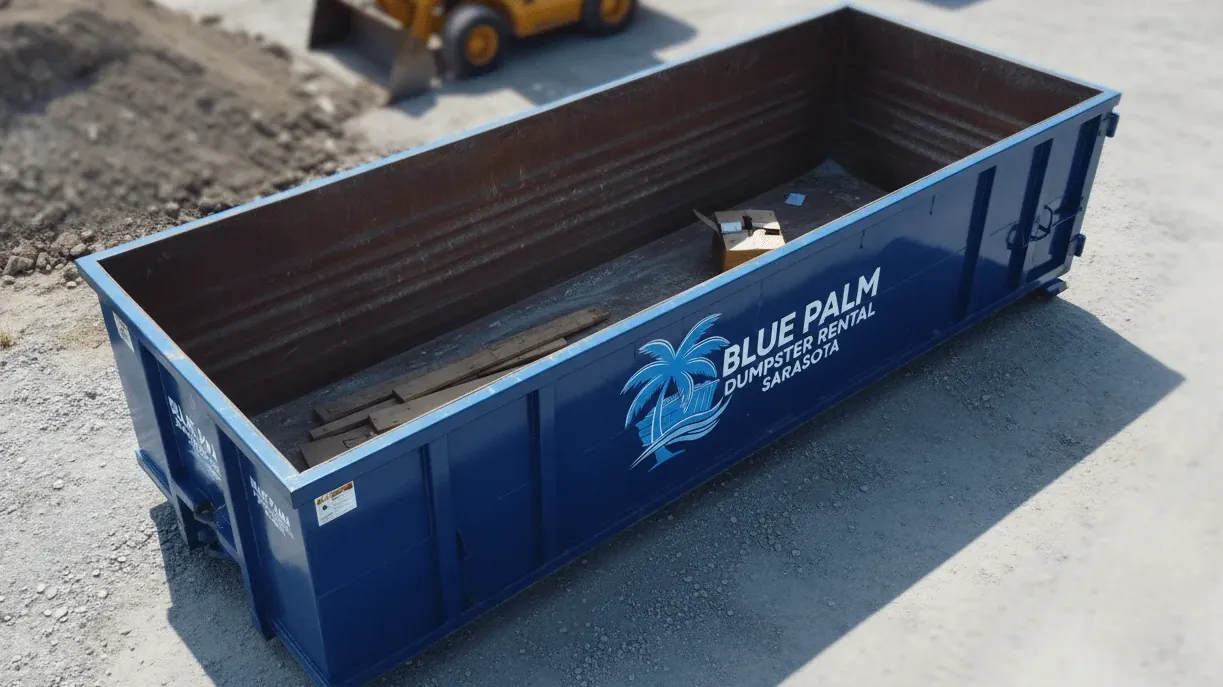
An estate cleanout is a search, an inventory and a distribution before it is ever a disposal, and the families who get hurt are the ones who run those steps in the wrong order. I have run roll-offs on the Suncoast since 2017, and in a market with one of the oldest median ages in the country this is not seasonal work — it is every week of the year, in Gulf Gate and Bee Ridge and Venice, in villas, in condos, and in mid-century houses that have not been emptied since 1971. What follows is the order I give people when they call and say the funeral is Saturday and the family flies home Tuesday.
The order, and why it is the order
Secure the property. Search it. Get value appraised. Distribute to the family. Donate. Then dispose. Every step destroys options for the one after it, which is why you never reverse them.
Do not start by throwing anything away. That is the most expensive mistake in this work, usually made in the first two hours by a relative who wants to feel useful. A first pass with a trash bag has, in houses I have worked, sent out savings bonds, a wedding ring in a pill bottle, and a signed mid-century chair with a beach towel over it. The container is for the disposal phase, not the discovery phase.
Probate and the executor's pace
Before anything of value leaves, the personal representative needs to know what the estate's attorney expects. Florida probate has its own procedures, timelines and inventory obligations, and the rules on what a representative may sell or distribute, and when, are specific. Rules change, too. Confirm with the estate's attorney before disposing of, gifting or selling anything of value, and do not let a confident opinion at the kitchen table substitute for that call.
In practice the job splits in two. Obviously worthless material — spoiled food, saturated cardboard, broken lawn furniture — moves immediately. Anything with a plausible resale or sentimental claim waits for authority and an inventory. That split is why the first container fills with attic and garage debris rather than furniture.
Secure and search before anybody sorts
Rekey the locks, get eyes on the property daily, and redirect the mail to the personal representative. Then search, deliberately, before volunteers arrive.
You are looking for cash, jewellery, firearms, prescription medication and documents. This generation does not keep money in one place. I have watched families pull currency out of a chest freezer wrapped in foil labelled "chuck roast," out of coffee cans, a hollow book on a den shelf, a tackle box in a shed, and taped envelopes under dresser drawers. Open every tin, tackle box and toolbox before it goes out the door.
- Firearms — secure them immediately with a family member legally able to possess them, or with law enforcement. Never leave one in a house standing open.
- Prescription medication — bag it for a pharmacy or law enforcement take-back box. Not the container, not the toilet.
- Small valuables — one locked box, one person holding the key, a written list.
The paperwork that must never reach the container
Set up a banker's box marked DOCUMENTS on day one. What matters: the deed, Florida homestead paperwork and any exemption or portability records, title and survey, life insurance and annuity policies, brokerage, pension and IRA statements, military discharge records (the DD-214, which the VA wants for burial benefits), savings bonds, vehicle and boat titles, several years of tax returns, and anything carrying an account number.
Paper savings bonds are real money and turn up here constantly, rubber-banded in a bedroom drawer. Annuity paperwork matters because annuities are common in this market and nobody remembers the carrier. Anything with an account number gets shredded, never tossed loose into a roll-off sitting in an open driveway overnight.
What a Sarasota house actually holds
Homes here are slab-on-grade block and stucco, so fifty years of accumulation lives in four places: the garage, the attic, the lanai and a backyard shed. Add a rented storage unit, which turns up in maybe a third of the estates I work and which nobody mentions until week two.
Then the seasonal wrinkle. A large share of the people who die here were snowbirds who kept a house up north and never fully unpacked this one. You are frequently dealing with a second home's worth of contents — duplicate furniture, duplicate kitchens, boxes shipped down in 2009 and opened never. Plan for it before you size anything. Our guide to seasonal cleanouts and the snowbird calendar covers the timing, and the general Sarasota home cleanout checklist runs parallel to this one.
The attic is a Florida attic
A vented attic under a dark roof here runs brutally hot and stays humid most of the year. Work it at first light, seven to ten, then stop — people get hurt in Florida attics in the afternoon, and heat illness sneaks up on anyone over sixty. Expect losses, too: photographs stuck into blocks, cardboard that collapses when lifted, tape that has let go, vinyl warped past playing, slides fogged. Carry bins up empty, because the original cartons will not survive the ladder.
Condo and villa estates are a different job
Half the estates on this coast are not houses. In a condo or attached villa there is no driveway, so the container goes in a parking area or service drive, which means board approval and often fire-marshal sign-off so you are not blocking a lane or a hydrant. Many associations cap how many days a container may sit — two or three is common in 55+ communities — and restrict work hours. Add a lift, a long carry, and neighbours still living there who did not sign up for a week of noise.
Get written approval before we schedule. Read how permits and placement approvals work in Sarasota, and if the drop is on pavers or shell, our notes on protecting driveways at delivery apply doubly. Protection boards go under every container we set.
The mid-century question: stop before the skip
The Sarasota School of Architecture — Rudolph, Twitchell, Lundy and their circle — produced 1940s to 1960s houses with flat roofs, glass walls, jalousie windows and terrazzo, and there is a serious salvage market for the parts. If the house is one of those, or simply period mid-century, things people rip out and bin have value: terrazzo under wall-to-wall carpet, jalousie hardware and cranks, period lighting, built-in casework, and the furniture itself. Get one honest opinion before demolition. It costs you a morning.
Appraise before you haul
Bring in an appraiser or a reputable estate-sale company before anything moves. Worth a look here: original art, mid-century furniture and lighting, coin collections, jewellery including costume pieces, quality tools, fishing and boating gear, and circus and Ringling-era memorabilia, a real local collecting category that turns up in older houses more often than you would think.
Then pick a route. An estate sale works when the house is full and presentable, and clears volume fast. An auction works when value sits in a handful of items rather than spread across a household. Donation handles the honest middle — usable furniture, housewares, clothing, medical equipment and mobility aids. What is left is the disposal job. If that leftover is small, a junk removal crew may beat a container; for a whole house it will not.
The sorting method that works
Room by room, never whole-house. Four categories only: keep, sell, donate, dispose. No maybe pile — that is where cleanouts go to die. One decision-maker per room, named out loud before you start, and the rest of the family carries. Stage piles in the garage, not the driveway: an afternoon storm in July soaks a donation pile in ten minutes and turns it into disposal.
| Room or area | What is usually in it | Where it goes | Watch out for |
|---|---|---|---|
| Garage | Tools, paint, fuel, pool chemicals, fishing and boating gear, spare freezer | Staging area; tools to sell; chemicals to HHW | Cash in coffee cans; the second fridge needs refrigerant handling |
| Attic | Photographs, slides, records, luggage, decorations | Family first, then dispose | Heat and damp damage; work before 10am; boxes fail on the ladder |
| Lanai and pool cage | Patio furniture, grills, pool equipment, screens, planters | Donate if sound, otherwise dispose | Propane comes out separately; sun-rotted cushions and webbing |
| Backyard shed | Mower, pesticides, fertiliser, hurricane shutters and panels | Shutters stay with the house; chemicals to HHW | Chemicals decades past label life |
| Kitchen | Duplicate cookware, small appliances, decades of stored food | Donate unopened food; dispose the rest | Freezer cash and hidden envelopes; check every tin |
| Bedrooms and closets | Clothing, jewellery, documents, medication, firearms | Secure box, family, donation | Search pockets, hems and shoeboxes before any bag leaves |
| Den or home office | Deeds, homestead paperwork, policies, statements, savings bonds, DD-214 | DOCUMENTS box, then shred | Never loose into a container |
| Living areas | Furniture, art, lamps, rugs, built-ins | Appraisal, then sale or donation | Mid-century pieces and terrazzo under the carpet |
| Storage unit | Overflow furniture, unopened moving boxes, files | Same four categories, on site | Nobody mentions it until week two; rent is still running |
Sizing, sequencing and what we cannot take
For a typical single-family estate a 15 yard roll-off or a 20 yard roll-off handles the first pass, with a next-day swap rather than guessing high on day one. First pull is attic, garage, shed and lanai; second is furniture and interiors once the family has taken what it wants. For a condo or villa a 10 yard container is usually right, and a smaller footprint is far easier to get approved.
Humidity forces decisions. Anything that comes out damp – a mattress, an upholstered chair, a box of books – gets decided the same hour. Mould gets going in roughly 24 to 48 hours here, so a damp item in a maybe pile is a disposal item that has not admitted it yet.
If the house predates 1980, stop before you demolish anything. Vinyl floor tile and mastic, textured and popcorn ceilings, and pipe wrap from that era routinely contain asbestos, and we cannot accept asbestos-containing material in any container. Test before disturbing. Asbestos is regulated by Florida DEP and the Florida Department of Health, requirements have changed more than once, and you should confirm current obligations with them or a licensed consultant before work begins.
Prohibited items are the other reliable snag. Paint, solvents, pool chemicals, fuel, propane cylinders, pesticides, batteries, tires, electronics and any appliance holding refrigerant stay out of the container and go to a household hazardous waste drop-off run by Sarasota County or Manatee County. There is no retail paint take-back programme in Florida, so do not go looking for one at the hardware store. Our list of what can and cannot go in a dumpster here spells out the rest, and county programmes change, so verify the current drop-off schedule first.
Hurricane season and the pace
Season runs June 1 to November 30. An estate cleared in those months should never have loose material sitting in an open container when a system is in the Gulf — pull it early rather than late. After a storm everything slows down, which is its own problem, covered in our storm surge cleanup guide.
Last thing. Do this over weekends, not one exhausting push. Families who try to empty a parent's house in four straight days make bad decisions on day three and throw out things they wanted. Three weekends with a container on site, swapped when it fills, gets a better outcome.
Blue Palm Dumpster Rental Sarasota has handled estate cleanouts across Sarasota County, Manatee County and the barrier islands since 2017. We yard out of 33rd Street East just north of University Parkway, so we run both counties daily, with protection boards standard and next-day swaps. Call Brady and the crew at (941) 413-2932, tell us what the house is and where it sits, and we will put the right container in the right spot on the day you need it.
Questions this guide did not answer? Call (941) 413-2932. We would rather spend two minutes on the phone than have you order the wrong container.