
Seasonal
Snowbird Season in Sarasota: A Month-by-Month Guide to Seasonal Cleanouts
Snowbird season here runs November through April, and the shoulder weeks either side are when every container on the coast gets booked. A month-by-month planner for seasonal cleanouts, condo placement and what cannot go in.
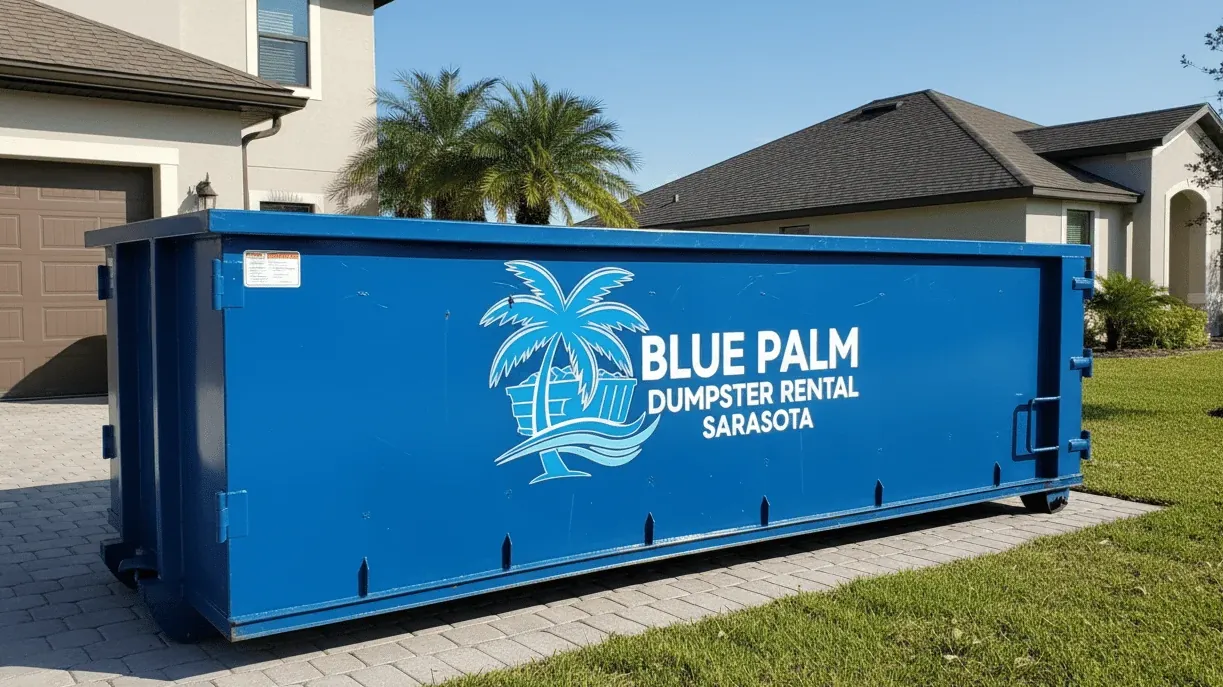
Every year around the second week of October my phone changes character. It is never the same voice twice — a property manager in Palmer Ranch, a daughter in Ohio whose parents fly in on the first, a board president on Longboat Key — but it is the same call. The place has been shut since May. Somebody opened it this morning. And now they need a container, ideally yesterday.
I have run roll-offs on the Suncoast since 2017, and the most avoidable problem in this business is that the Sarasota year has an obvious rhythm and almost nobody plans around it. Snowbird season runs roughly November through April. The seasonal population arrives inside about a six-week window and leaves inside about a four-week window, so every container, cleaner, painter and handyman on this coast gets asked for the same fortnight. Book weeks out and you get what you want. Book days out and you take what is left.
The two crunches: opening weeks and closing weeks
The opening weeks are late October into the first half of November, when seasonal residents come back to a house that has sat closed through the hottest, wettest five months of a Gulf Coast year. The closing weeks are the back half of April into mid-May, when the same houses get cleared, packed down and shut again — and when a fair share of them get emptied for good.
Both windows squeeze the region's residential work into a few weeks. Add a wrinkle particular to us: the closing weeks run straight into hurricane season on June 1, so the work has a hard deadline behind it whether anyone says so or not.
What five months closed up actually does
People who leave in May expect to come back to dust. What they get is chemistry. Even with the air running on a holiday setpoint, a Sarasota house sits in months of high dew points. Cardboard and paper go soft and wavy, then musty. Photographs stick together in the box. Upholstered furniture and mattresses hold moisture and start to smell. Particleboard and MDF swell at the edges and the veneer lifts — that flat-pack dresser in the guest room does not survive many summers. Books curl, slides bloom.
Because we are slab-on-grade here, storage lives in the worst conditions in the house: the garage, the attic, the lanai and the backyard shed, none of it conditioned. A garage in August runs well over a hundred degrees and an attic higher. That is where the ruined boxes are.
Then there are the failures. A tripped breaker on the air handler, a clogged condensate line, a compressor that quit in July — any one of those and the whole contents of a condo can be a loss. I have emptied units where furniture, drapes, rugs, mattresses and clothing all went in one load because mildew had taken everything soft in the place. A house nobody opened for five months also invites company: palmetto bugs in the pantry, rodents in the attic insulation, wasps in the lanai screen track.
Why the shoulder weeks are the crunch
It is not just containers. In the same fortnight, every seasonal household wants a cleaning crew, a carpet cleaner, an AC tech, a painter and a hauler, and the trades are drawing from the same pool of weeks. Once the first week of November fills, it stays filled.
Book the container the way you book the flight: weeks out, with a date. We keep capacity for same-day and next-day delivery, but in the first two weeks of November and the last two of April that capacity is thin. A scheduled residential roll-off for a seasonal cleanout booked in September for a November drop costs no more and removes the problem entirely. And if you can only be in the house for four days, a booked next-day swap-out matters more than the size you picked.
The downsizing reality
This is one of the oldest median-age markets in the country, and I will be blunt about something the calendar hides. A large share of what looks like a routine seasonal clear-out is the first stage of selling up, moving in with family, or a move to assisted living. The family books a container for a bit of decluttering, and by day two we are talking about the whole house.
Treat those contents carefully. Do not let a well-meaning crew race a lifetime of belongings into a box on a Saturday. There is real value in the older stock here — mid-century pieces, period fixtures, jalousie hardware, silver, tools, coins, art, paperwork nobody has read. Get an appraiser or estate buyer through before the container arrives, not after. Our Sarasota estate cleanout checklist sets out the room-by-room order and the documents to pull first, and when a job turns into a full house we run it as an estate cleanout, at a pace that lets the family sort.
Furnished rentals and turnovers
Seasonal rental furniture works hard. A unit turning over three or four times a season ages a sofa fast, and most owners replace on a rough cycle: mattresses first, then case goods, then the sleeper sofa nobody has liked since 2019. April and May is when it gets done, because the unit is finally empty.
Two practical notes. Mattresses and box springs are frequently handled as a separate item at the facility, so tell us how many are going in when you book — declared up front it is a non-event, found at the scale it is a problem. And know what will not be accepted before you load; our guide to what can and cannot go in a dumpster in Sarasota County is the short version.
Condo, villa and 55+ placement
Half the seasonal housing here has no driveway to put a container on. That is normal and workable, but it needs a phone call first.
- Placement is usually a parking area or a drive aisle. That means blocking spaces, and it means the association has an opinion.
- Board approval is common and the fire marshal sometimes gets involved, because a drive aisle is a fire lane. Get the approval in writing, with the dates and the exact spot.
- Many 55+ communities cap how long a container may sit — a few days is typical, and some want it gone over a weekend. Ask before you book, then pick a size and schedule that fits the cap.
- Protect the surface. Pavers, shell and older asphalt all mark, so we put protection boards down as standard — here is how we protect driveways on delivery.
- If the container sits in the public right of way, that is a permit question, and Sarasota County, Manatee County and the cities of Sarasota, Venice, Bradenton and North Port each run their own rules. Our notes on dumpster permits in Sarasota cover the usual cases; requirements change, so confirm with Sarasota County or Manatee County before delivery day.
The hurricane overlap in May
Season closes as season opens. Anything staged outside in late May — lanai furniture, boxes beside the garage, a half-full container sitting there while the owners fly home — is a projectile the moment a system spins up in the Gulf. Two rules I hold to: do not leave debris staged outdoors when you shut the house for the summer, and do not book a container to sit through a watch. If a storm is named and pointed at us, we pull cans rather than leave them loaded on a driveway. Watch the National Weather Service and Florida Division of Emergency Management in the closing weeks, and if the worst has already happened, our storm surge and hurricane cleanup guide covers the order of work.
What does not go in the box
Every seasonal cleanout turns up the same shelf in the garage: half-used paint, pool chemicals, a gas can, a propane cylinder off the grill, lawn pesticide, old batteries, a set of tires, a dead TV and a mini-fridge from the lanai. None of it rides in a roll-off. Paint, solvents, pool chemicals, fuel, propane, pesticides and batteries go to a Sarasota County or Manatee County household hazardous waste drop-off, and plainly: there is no retail paint take-back programme in Florida. The store will not take it; the county will. Tires, electronics and anything with refrigerant — fridges, freezers, window units, dehumidifiers — are handled separately too. Our recycling and disposal guide for Sarasota County lists the routes, and county schedules change, so check before you load the car.
Donate before you haul
Seasonal furniture is often barely used — a guest bedroom set that hosted twelve nights a year is not worn out. Book the donation pickup before the container arrives, because the good pieces have to go first for the timing to work. Dry, clean, structurally sound furniture, working small appliances, housewares, linens and tools all move. Anything mildewed, water damaged or soft-framed does not, and no charity wants it. That is what the container is for.
Sizing a seasonal clear-out
For a condo or villa purge, a 10 yard roll-off is usually right, and a 15 yard covers a unit where the furniture is going too. For a single-family house being emptied, a 20 yard is the workhorse and still fits a standard driveway. Bigger is not automatically better: a 30 or 40 on a short barrier-island driveway or in a villa drive aisle is the wrong answer, and sandy soil and a high water table mean a heavy box in a soft spot is a real risk. Our Sarasota dumpster size guide works it through by room count.
The season planner
| Month | What is happening | What to book | What catches people out |
|---|---|---|---|
| September | Peak hurricane season, houses still closed | Your November container date | Waiting until October, when the calendar is tight |
| October | Early arrivals, first openings | Cleaners, AC service, container for early November | Opening up to find an AC failure took the contents |
| November | Main arrival wave, opening cleanouts peak | 10 or 15 yard for a condo, 20 for a house | Every trade on the coast booked the same fortnight |
| December | Season in full swing, holidays | Small container for garage and attic purges | Holiday weeks eat delivery days |
| January | Best container availability of the season | Remodels, flooring, impact windows, big sorts | Nobody uses the one easy month |
| February | Peak occupancy, rental turnovers | Mattress and furniture swaps, small roll-off | Undeclared mattresses at the scale |
| March | Sell-up decisions made, listings prepped | Appraiser or estate buyer first, container second | Hauling before anyone valued the contents |
| April | Departure wave, closing cleanouts peak | Container booked weeks ahead with a firm pull date | No board or 55+ approval, container in a fire lane |
| May | Final closings, houses shut for summer | Last haul, donation pickup, hazardous waste run | Debris staged outdoors with June 1 a fortnight away |
| June–August | Closed houses, heat and humidity working | A neighbour or manager checking the AC monthly | A July breaker trip nobody finds until November |
The line I would underline is January. It is the only month in the season with real slack — everyone is here, and the containers and trades are not fighting over the same week. If you have a room to empty, a lanai to clear or a remodel you keep putting off, do it in January and take your pick of dates.
Book the season, not the week
We run both counties every day out of 33rd Street East, just north of University Parkway by the airport, which is why a Longboat Key opening and a Lakewood Ranch turnover can be the same morning for us. Brady Hollis has been at this since 2017, we are licensed and insured, pricing is flat-rate, protection boards are standard, and next-day swap-outs mean a four-day window is enough to empty a house. Tell us your arrival or departure date and we will hold a delivery around it. Call (941) 413-2932 and pick your week before the rest of the coast picks it for you.
Questions this guide did not answer? Call (941) 413-2932. We would rather spend two minutes on the phone than have you order the wrong container.