
Construction
Construction Debris Disposal in Southwest Florida: A Contractor's Guide
A working guide for Sarasota and Manatee builders and GCs: C&D versus solid waste, two county systems, yard trash rules, weight limits, and how to phase containers by trade.
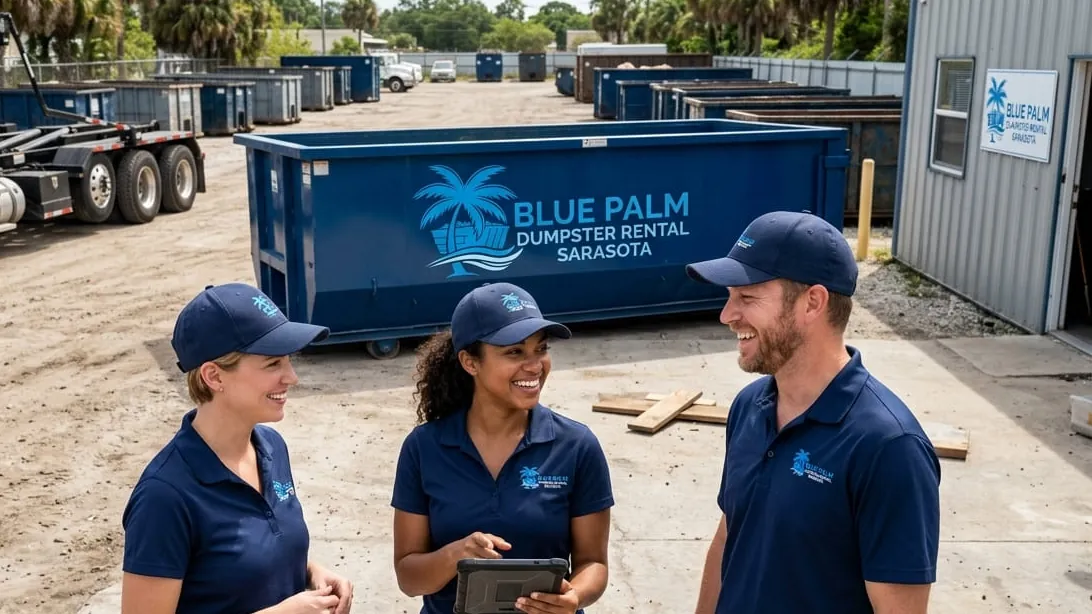
Debris is the line on a southwest Florida job that quietly eats schedule. Nobody bids it carefully, everybody pays for it, and on a tight Sarasota lot or a builder street in Lakewood Ranch it is usually what stalls the trade behind you. Crews that plan the waste stream like a material delivery finish clean; the ones that treat the box as an afterthought pay in extra hauls, reclassified loads and standing labour.
C&D is not municipal solid waste
Construction and demolition debris is a defined waste category in Florida, handled separately from municipal solid waste. C&D is the inert, bulky material off a construction, renovation or demolition job — concrete, block, lumber, drywall, roofing, siding, insulation, glass, carpet, fixtures. MSW is household garbage.
They go to different destinations and they are rated differently. Put a few bags of lunch trash into a clean C&D load and the scale operator can reclassify the whole load — you are not charged for the bag, you are charged for the box. It is why a real jobsite garbage can with a lid belongs on every site plan. Our construction dumpster rental service is built around keeping that line clean, and the Sarasota County accepted materials guide covers the prohibited list.
Two counties, two systems
Our yard sits at 6805 33rd St E, just north of University Parkway on the Manatee side, which is why we run both counties every day. Sarasota County and Manatee County operate separate solid waste systems — separate facilities, acceptance rules and rate structures — and the cities of Sarasota, Venice, Bradenton, Palmetto, North Port and Longboat Key add layers on top. So the same load can have a different destination and a different cost depending on which side of University Parkway the job sits, and a Lakewood Ranch build straddling the line can genuinely have two answers. Before bidding a large job, confirm current acceptance rules with Sarasota County or Manatee County directly — these programmes change. Permitting is separate again; if the box goes in a right-of-way rather than on private property, read the Sarasota dumpster permit rules first.
Yard trash rides as its own clean load
Florida separates yard trash from solid waste. Vegetative debris — trees, limbs, fronds, stumps, brush — rides as a separate clean load to a yard waste or mulching facility. Mix it into a construction load and it gets reclassified at the scale, and you have paid C&D rates on mulch.
On a new lot out east this is not a minor stream. Land clearing in the east-county corridor produces real volume, and the mix is live oak, sabal palm, Australian pine and Norfolk Island pine. That mix is the trap: people size the box off the pine and the palm, which are light and bulky, then the live oak limbs go in and the weight triples. Run clearing debris in a dedicated yard waste container and size it by the hardwood, not the fronds.
Separating streams pays for itself
On anything bigger than a bathroom, sorting is the cheapest thing you can do:
- Clean concrete and block get crushed for fill and base. Keep them free of dirt, wood and plastic and they move as recoverable material rather than heavy mixed C&D. Run them in a dedicated concrete and heavy debris container.
- Clean wood — framing cutoffs, untreated lumber, pallets — gets ground. Painted, treated and engineered wood generally does not qualify, so keep the pile honest.
- Metal goes to scrap: duct, conduit, copper, aluminium window frames, rebar, lanai cage. On a re-roof or window job the metal alone earns its own pile.
- Cardboard bales. On a production build the appliance and cabinet cartons are a real fraction of the volume and it is all air — break it down or it eats a 30 yard box.
The counter-case is the small remodel: below a certain volume, sorting costs more in labour and container space than it saves. One well-managed mixed box beats four half-empty specialised ones.
Weight is the constraint, not volume
Every container has a weight rating and heavy material hits it long before the box looks full. Concrete, block, stucco, terrazzo, tile, sand and fill run roughly 2,400 to 2,800 pounds per cubic yard, which is why a masonry box gets loaded to about a third of its visible capacity.
Roofing is the other surprise. Concrete and clay tile run roughly three to four times the weight of a shingle square, so a tile tear-off is a completely different sizing exercise from an architectural shingle re-roof on an identical footprint. The roofing tear-off size guide works the squares-to-yards maths through.
The rule for heavy material is smaller box, more swaps. A 10 or 20 yard container on a clean masonry stream beats a 40 yard box that cannot legally be moved once loaded. An overweight box is a truck that leaves empty and a crew standing around.
Phasing a job by debris stream
| Project phase | Dominant debris | Container size | What catches people out |
|---|---|---|---|
| Land clearing / site prep | Live oak, sabal palm, Australian pine, Norfolk Island pine, brush | 30–40 yard, yard waste only | Hardwood limbs weigh several times the palm and pine; sized off the fronds, the box goes overweight |
| Foundation, slab and masonry | Broken block, stucco, concrete, sand, fill | 10–20 yard, clean masonry only | 2,400–2,800 lb per cubic yard — at capacity when it looks a third full |
| Framing and dry-in | Lumber cutoffs, sheathing, banding, pallets | 30–40 yard | Light and bulky; nobody stacks, so you buy air and double the haul count |
| Roofing tear-off | Shingle, felt, concrete or clay tile, flashing | 15–20 yard for shingle, 10–15 yard for tile | Tile runs three to four times a shingle square; pre-1980 felt can carry asbestos |
| Interior demo (remodel) | Drywall, terrazzo, floor tile, cabinetry, jalousie and aluminium frames | 20–30 yard | Pre-1980 tile, mastic, ceilings and pipe wrap need testing before anything is swung |
| MEP rough and trades | Conduit, duct offcuts, wire spool, PVC | 10–20 yard | Metal pulled separately is scrap; left in the mixed box it is dead weight |
| Finishes and punch-out | Cardboard, packaging, drywall scrap, trim offcuts | 20–30 yard | Cartons are pure volume; liquid paint and solvents go to household hazardous waste, never the box |
| Condo / structural repair | Spalled concrete, rebar, railing, waterproofing membrane | 10–20 yard, staged swaps | Board and often fire-marshal sign-off on placement, with residents still living upstairs |
Three very different jobs in one market
1. New residential at scale, east county
Lakewood Ranch and the east-county corridor run production volume, and the debris is the easiest kind: clean, predictable, repeatable. The win is phasing — one container per trade window, swapped on a schedule, never a heaped box sitting through the weekend while three trades pile on. A heaped container cannot legally leave, so the box due Monday is not there and the drywall crew works around a pile on the driveway.
2. First-refresh and mid-century remodel, older Sarasota
In the older neighbourhoods off Bahia Vista and Siesta Drive the material changes: terrazzo under the carpet, jalousie frames, single-pane aluminium windows, plaster, pre-1980 flooring and adhesives. Weight per square foot goes up and unknowns go up with it.
Take a beat before you swing. The Sarasota School of Architecture work of Paul Rudolph, Ralph Twitchell and Victor Lundy — flat roofs, glass walls, jalousies, terrazzo — sits alongside 1920s Mediterranean Revival from the Ringling boom. Salvage buyers exist for terrazzo, jalousie hardware and period fixtures, and one call before the skip sometimes pays better than the haul. For the rest, a demolition debris container sized for weight is right.
3. Condo and coastal structural work
Milestone inspections and structural integrity reserve studies have created a sustained pipeline of repair work — spalling concrete, balconies, railings, walkways, waterproofing and re-roofing across Sarasota, Longboat Key and downtown. These requirements have changed repeatedly, so an association should confirm its current obligations with its own attorney and engineer.
Operationally this is the hardest work in the market. Placement on association property needs board approval and often fire-marshal sign-off — you cannot block a fire lane, a hydrant or an egress path — and residents are living in the building while you work. Small boxes, tight staging, scheduled swaps. The condo milestone and SIRS repair debris guide walks the approval sequence in order.
Impact windows: heavy, awkward, its own stream
Impact window replacement is a large local market and a stream unlike any other. Old single-pane glass and aluminium frames come out heavy, sharp and shaped to waste space. Pull the frames off the glazing, keep glass low and flat in the box, and never let a window job share a container with light framing waste — you will hit weight with the box half empty.
Asbestos, lead and the NESHAP inspection
Pre-1980 stock here routinely carries asbestos: floor tile and the black mastic under it, pipe and duct wrap, popcorn and textured ceilings, cement-asbestos siding, roofing felt. Pre-1978 homes carry lead paint, putting the work under the EPA Renovation, Repair and Painting rule.
Asbestos is regulated by Florida DEP and the Department of Health, and demolition generally triggers a NESHAP inspection and notification before work starts, whether or not anything is found. Requirements change, so verify current obligations with the agencies before you set a demo date. What does not change: we cannot take asbestos-containing material in any container. ACM goes to a licensed abatement contractor, and suspect material gets tested, not guessed at.
Ground, water and weather
Call Sunshine 811 before anything goes in the ground. It is free, it is required, and on infill lots the utility records are frequently wrong about depth.
Stormwater is not a formality here. Sandy soil and a high water table mean runoff moves fast and does not filter, and it reaches Sarasota Bay, Roberts Bay and Phillippi Creek, where seagrass and water quality are watched closely. Keep silt fence intact, site stockpiles away from inlets and swales, and contain concrete washout. Wet ground is a delivery problem too — loaded trucks sink, and a soft yard after two days of rain is a dry run.
Hurricane season runs June 1 to November 30. When a storm enters the cone, secure the site — loose material becomes projectiles — and get containers emptied before landfall, not after. Helene's surge in late September 2024 and Milton coming ashore at Siesta Key two weeks later showed what the aftermath looks like: every container in southwest Florida is spoken for and lead times stretch for weeks. Plan for the post-storm scramble before it starts. Humidity does its own damage in between — anything that gets wet on an open site is on a 24 to 48 hour mould clock.
Barrier islands and dry runs
Siesta Key, Lido Key and Longboat Key are their own logistics problem. Driveways are short and often shell or paver, turnarounds are tight, overhead vegetation is low, and causeway traffic dictates the delivery window. A roll-off truck needs roughly 60 feet of straight clearance to set and pull a box, and about 23 feet overhead. On the keys that gets measured, not assumed, and protection boards go under the rails every time — see the driveway protection notes.
A dry run is a truck that arrives and cannot deliver: a car in the spot, a locked gate, a soft yard, an unapproved placement, a low branch nobody looked up at. All of it is preventable with a photo and a text the day before. Send the driver a picture of the exact placement, and check the roll-off size comparison before you book.
Book it like a material delivery
Blue Palm Dumpster Rental Sarasota has run both counties since 2017 — flat-rate pricing, same-day and next-day delivery, next-day swap-outs, protection boards standard. Tell us the job type, the phase and the material, and we will size it by weight rather than by guess. Call (941) 413-2932 and put the debris plan on the schedule.
Questions this guide did not answer? Call (941) 413-2932. We would rather spend two minutes on the phone than have you order the wrong container.